

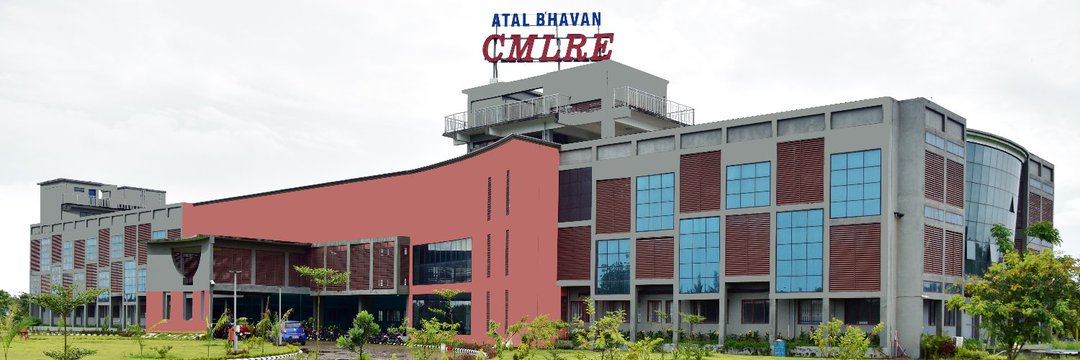
The Center for Marine Living Resources & Ecology (CMLRE), Kochi, Kerala , under the Ministry of Earth Sciences (MoES), has achieved a landmark milestone in marine conservation. The Ministry of Environment, Forest and Climate Change (MoEFCC) has officially designated CMLRE’s “Bhavasagara” Referral Centre as a National Repository for Deep-Sea Fauna.
This prestigious recognition, conferred under the provisions of the Biological Diversity Act, 2002, establishes the Centre as a critical national facility for the preservation, study, and documentation of India’s vast deep-sea biological heritage.
The “Bhavasagara” Referral Centre currently serves as a vital scientific hub, housing an extensive collection of over 3,500 taxonomically identified and geo-referenced voucher specimens. The collection spans a diverse range of marine life, from invertebrates—including cnidarians, annelids, molluscs, arthropods, and echinoderms—to vertebrates such as elasmobranchs and teleostean fishes.
Dr. M. Ravichandran, Secretary, Ministry of Earth Sciences, emphasised the strategic importance of this designation: “The recognition of ‘Bhavasagara’ as a National Repository is a definitive step toward strengthening India’s blue economy and marine biodiversity framework. By centralizing the custody of deep-sea specimens and their genetic data, we are not only preserving our natural history but also providing a foundational resource for future generations of ocean scientists to unlock the mysteries of the deep sea.”
Under the Biological Diversity Act, the Repository is authorised to:
• Maintain Secure Custody: Preserve representative biological samples as voucher specimens along with critical associated data, such as DNA sequences, for future scientific reference.
• Hold Type Specimens: Act as the official custodian for any new deep-sea species discovered within Indian waters.
• Capacity Building: Foster expertise in deep-sea taxonomy, aligning with the goals of the UN Decade of Ocean Science for Sustainable Development (2021–2030).
This designation marks a significant leap forward in India’s deep-sea research capabilities. CMLRE invites researchers, academic institutions, and environmental stakeholders to utilize this facility and collaborate in strengthening the nation’s framework for marine biodiversity conservation.
