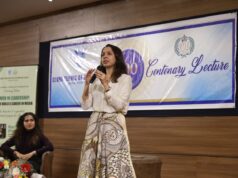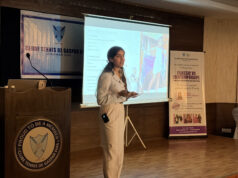

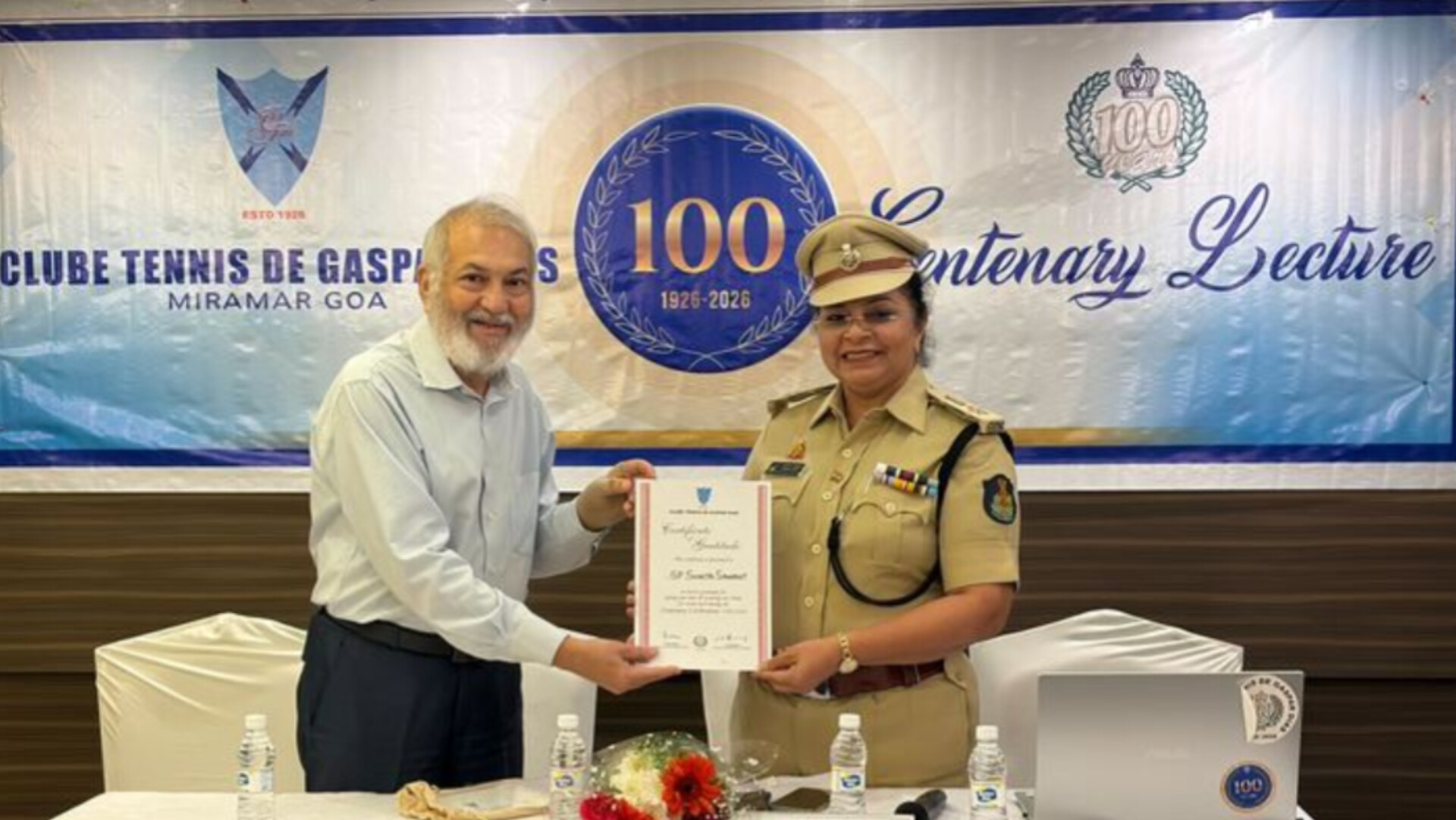
The advent of social media has challenged the conventional role of the ‘khabri’ or police informer, as far as the police apparatus is concerned, according to Superintendent of Police (SP) Sunita Sawant. Sawant, one of the highest-ranked women Goa Police officers, in a talk as part of Clube Tennis de Gaspar Dias’ ongoing centenary lecture series in Panaji; also said that while the digital age may have dethroned the traditional police khabri, the need for trust and cooperation between communities and the police remains as critical as ever.
“A khabri has always been an important part of conventional policing. Earlier, a khabri was someone who sat at the corners of villages or wards in the evenings, observing and discussing who came in, who left and what was happening around. The police would discreetly gather this information, verify it and use it to maintain law and order. The public had confidence in the police and information flowed both ways, quietly and responsibly,” she said, during her lecture titled ‘Police and Public: Expectations and Responsibilities
“Today, social media has taken over that (khabri’s) role in many ways. With just one click, a huge amount of information spreads rapidly. The concern is that this information is often neither verified nor responsible. Rumours circulate easily and sometimes even escalate into aggression that challenges law and order in society and in the state,” she said, adding that a police-khabri relationship must be rooted in integrity and contribute to policing efforts and in the interest of society, Constitution and law, and “not for personal gain”.
Sawant argued that policing cannot succeed by mere enforcement alone. “Safety emerges when people share vigilance and civic responsibility. Police are first responders, but public cooperation prevents crimes even before they occur,” the senior Goa Police officer said.
Sawant recalled two cases from her long-standing career that, the police officer claimed, shaped her view of policing as a deeply human service.
She spoke of Goa’s first human trafficking case in 2009, in which an 11-year-old girl was rescued at 13 after two years of exploitation. At the time, Sawant helped secure the conviction of 12 traffickers in India and coordinated prosecution of two more in Bangladesh, including 10 years’ rigorous imprisonment for the main accused.
“The victim’s testimony was long and painful, but she needed someone to listen to her. We arrested 12 accused in India and enabled action against traffickers in Bangladesh as well. These cases require professionalism as well as deep empathy,” she said.
In another instance – a missing medical student, Sawant had helped years earlier, called her a decade later as a qualified doctor, seeking blessings before her wedding. “It reminded me that policing is not paperwork alone. We are counsellors, guardians and protectors. Compassion saves futures.”
Sawant further said that the Goa Police is investing heavily in future-ready policing, including commando and anti-terror training, disaster response, improved investigation protocols and digital outreach initiatives such as YouTube and WhatsApp-based community policing.
“Modern policing anticipates risk. We must adapt to social change and support communities long before wrongdoing occurs,” she added.