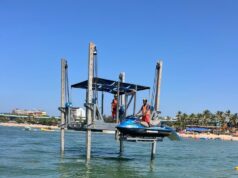

In a first in the country, Drishti Marine, the state government-appointed beach safety agency, has deployed a novel apparatus, ‘Seahorse’ – in addition to the existing beach towers – to keep vigil on four popular beaches in Goa.
The deployment of four floating Seahorse platforms for now, at popular high-footfall beaches, namely Calangute, Candolim and Miramar in North Goa and Baina in South Goa, comes at a time when Goa’s beaches witness peak traffic during the ongoing New Year holiday season.
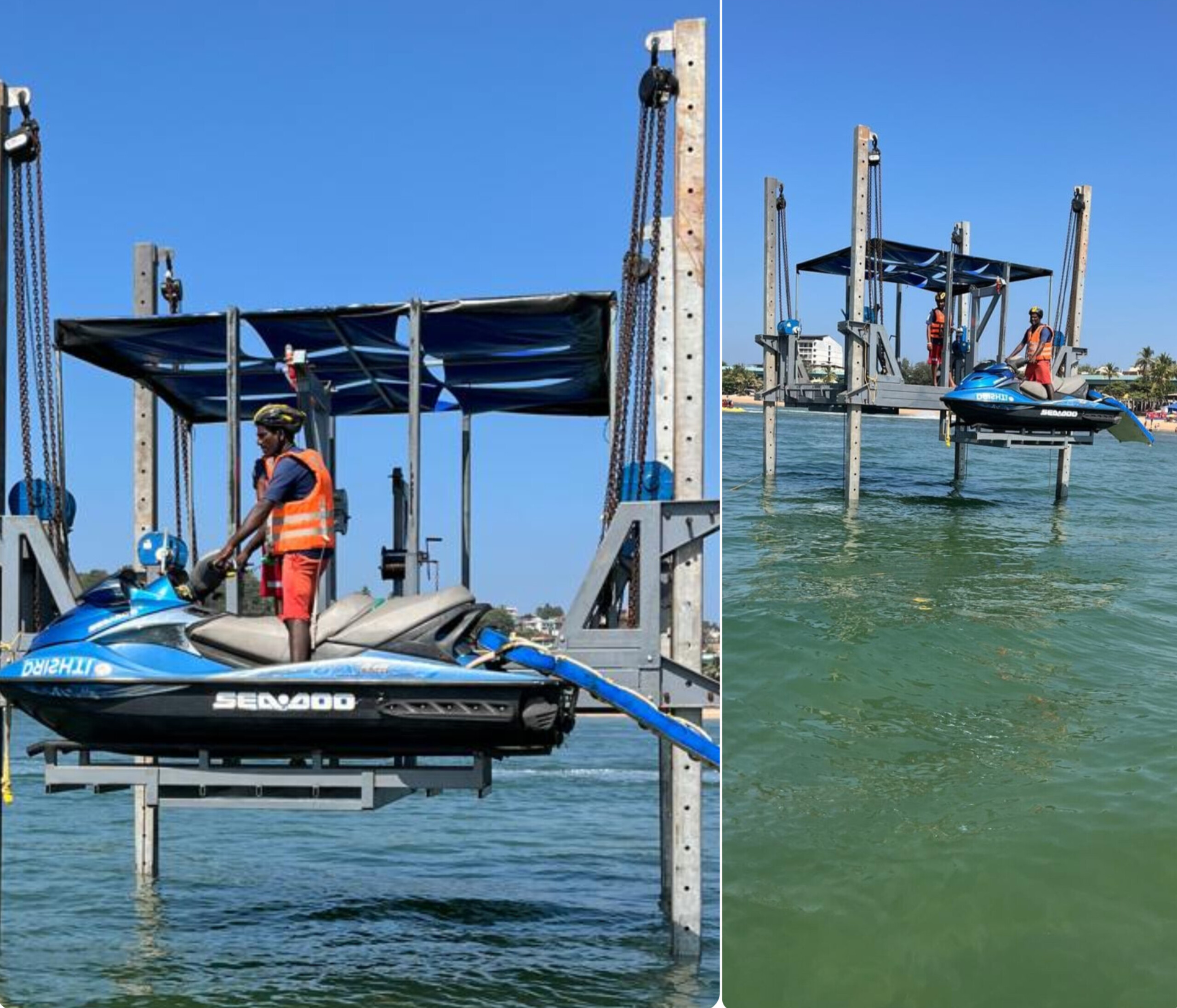
With sand erosion on beaches making lifesaver watchtowers increasingly untenable, the Seahorses, temporary floating stations, will for now be deployed in the sea off beaches as floating watchtowers, allowing lifesavers to monitor swimmers and beachgoers from vantage points at sea.
Each Seahorse unit accommodates four to six lifesavers and is equipped with a jet ski ramp, rescue boards, surfboards and rescue tubes. A jet ski is stationed on the temporary floating stations’ ramps, enabling immediate response to water-related emergencies. “The Seahorse will help reduce the response time to emergencies to under a minute, compared to the three to five minutes it currently takes for backup to reach from the beach,” said Drishti Marine CEO Navin Awasthi.
The temporary floating stations have already been pilot-tested at multiple locations and the current deployment of Seahorses is specifically aimed at adding to vigilance efforts at a time when beaches in the state are more crowded than usual, on account of festivities which spill into the first week of 2026.
Conceptualised by Drishti Marine Chairman Rajiv Somani, the Seahorse is a first-of-its-kind floating platform designed to act as a fully functional lifeguard post at sea. Once floated to a desired location, its four legs—each approximately six metres long—can be anchored into the seabed to hold the platform steady. Depending on depth and tidal conditions, it can be positioned 20 to 30 metres from the shore.
At present, lifesavers are required to monitor crowded beach stretches from towers or patrol on foot, often battling visibility challenges in high-density tourist areas. The temporary floating platforms will give teams a wider field of view and allow for quicker intervention, especially when swimmers drift into danger zones.
“The concept of the Seahorse emerged from a simple challenge. Our towers were being impacted by sand erosion and we could not move them inland due to private property boundaries. We needed an agile, movable structure that could stay steady at sea,” said Awasthi.
In addition to the increased beach vigil via the Seahorse platform, Drishti Marine has taken significant pre-emptive safety measures this holiday season to safeguard beachgoers, which include increasing the number of on-duty lifesavers by 135 personnel, comprising 70 lifesavers and 14 beach marshals in South Goa and 65 lifesavers and 19 beach marshals in North Goa.
More than 450 Drishti Marine lifesavers keep vigil on the state’s 24 beaches in North Goa and 30 beaches in South Goa, in addition to the Dudhsagar waterfalls and Mayem lake.