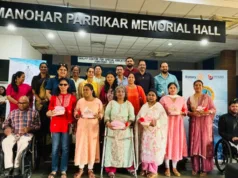

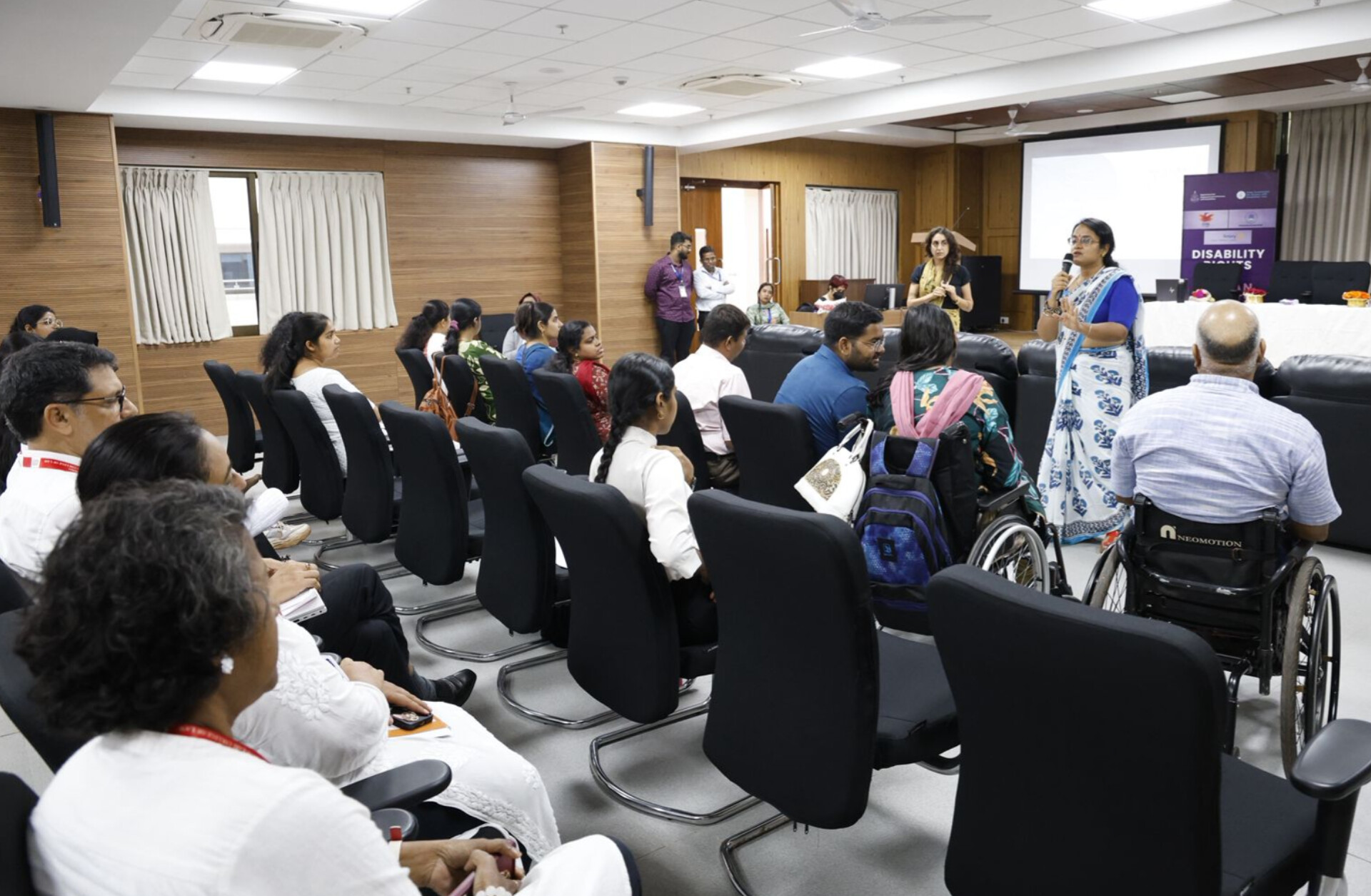
As part of International Women’s Day celebrations; more than 120 law students, legal professionals and women with disabilities gathered at the New District and Sessions Court Complex in Tiswadi for a day-long training programme titled ‘Disability Rights Are Human Rights.’
The initiative aimed to strengthen understanding of the intersection of gender, disability and the law, while encouraging future legal professionals to play an active role in advancing inclusive access to justice for women and girls with disabilities.
The training was organised by the Office of the State Commissioner for Persons with Disabilities, the Department for Empowerment of Persons with Disabilities- Government of Goa, Rising Flame, the North Goa District Legal Services Authority and the Rotary Club of Bardez Coastal.
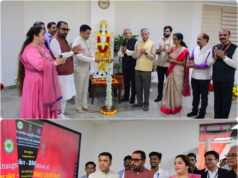
The programme was inaugurated by Varsha Naik, Director, Department for Empowerment of Persons with Disabilities, Government of Goa; Taha Haaziq, Secretary, Office of the State Commissioner for Persons with Disabilities and President, Rotary Club of Bardez Coastal; Shantashri S. Sinai Kudchadkar, Secretary, North Goa District Legal Services Authority; and Nidhi Goyal, Founder and Executive Director of Rising Flame.
In her inaugural address, Nidhi Goyal, Founder and Executive Director of Rising Flame highlighted that despite existing legal protections, women with disabilities continue to face barriers due to stigma, lack of awareness and systemic exclusion. She said: “building awareness and sensitivity among future lawyers is key to ensuring women with disabilities are able to claim their rights.”
She spoke about the persistent invisibility of women with disabilities within legal and social systems. She highlighted that one in five women globally lives with a disability, yet their experiences of violence, discrimination and exclusion often remain overlooked. She pointed out that stereotypes frequently infantilise or desexualise women with disabilities, leading to the dismissal of complaints of abuse and violence.
Goyal also highlighted issues such as lack of autonomy and consent, invisibility in data, and barriers — both physical and digital that prevent many women from accessing justice.
Addressing participants, Shantashri S. Sinai Kudchadkar, Secretary, North Goa District Legal Services Authority emphasised the role young legal professionals play in shaping an inclusive justice system. She said: “Under Section 12 of the Legal Services Authorities Act, both women and persons with disabilities are entitled to free legal aid irrespective of income,” highlighting the importance of sensitising future lawyers to disability and gender perspectives to ensure these rights are effectively realised.
Taha Haaziq, Secretary, Office of the State Commissioner for Persons with Disabilities, underscored the Government’s commitment to promoting awareness and implementation of disability rights. He encouraged law students to recognise their responsibility as future justice actors in upholding equality, dignity and access to justice for persons with disabilities.
A unique aspect of the programme was that all facilitators were women with visible and invisible disabilities, including lawyers and legal researchers. Their lived experiences, combined with legal expertise, offered participants valuable insights into the gap between legal protections and the everyday realities faced by women with disabilities. The training featured sessions on five key laws relevant to women with disabilities, helping participants understand how legal frameworks apply in cases where gender and disability intersect.
Aanchal Bhateja from the Vidhi Centre for Legal Policy led a session on the Rights of Persons with Disabilities Act, 2016, explaining the shift from a medical model of disability to a social model. Srinidhi Raghavan from Rising Flame spoke about workplace safety and dignity, focusing on the intersection of disability and workplace harassment, and the need for inclusive and accessible complaint mechanisms.
Sanchita Ain, Advocate-on-Record at the Supreme Court of India, addressed violence faced by women with disabilities both within and outside the home. She highlighted how the Protection of Women from Domestic Violence Act, 2005 recognises physical, emotional and economic abuse, and explained disability-specific forms of abuse. Through these discussions, the programme sought to encourage future lawyers to recognise systemic barriers and approach legal interpretation through an intersectional lens.
The training concluded with a call for the legal community to move beyond neutral interpretations of the law and adopt intersectional approaches that ensure justice systems are accessible, responsive and inclusive for all women.