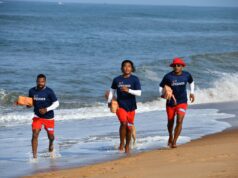

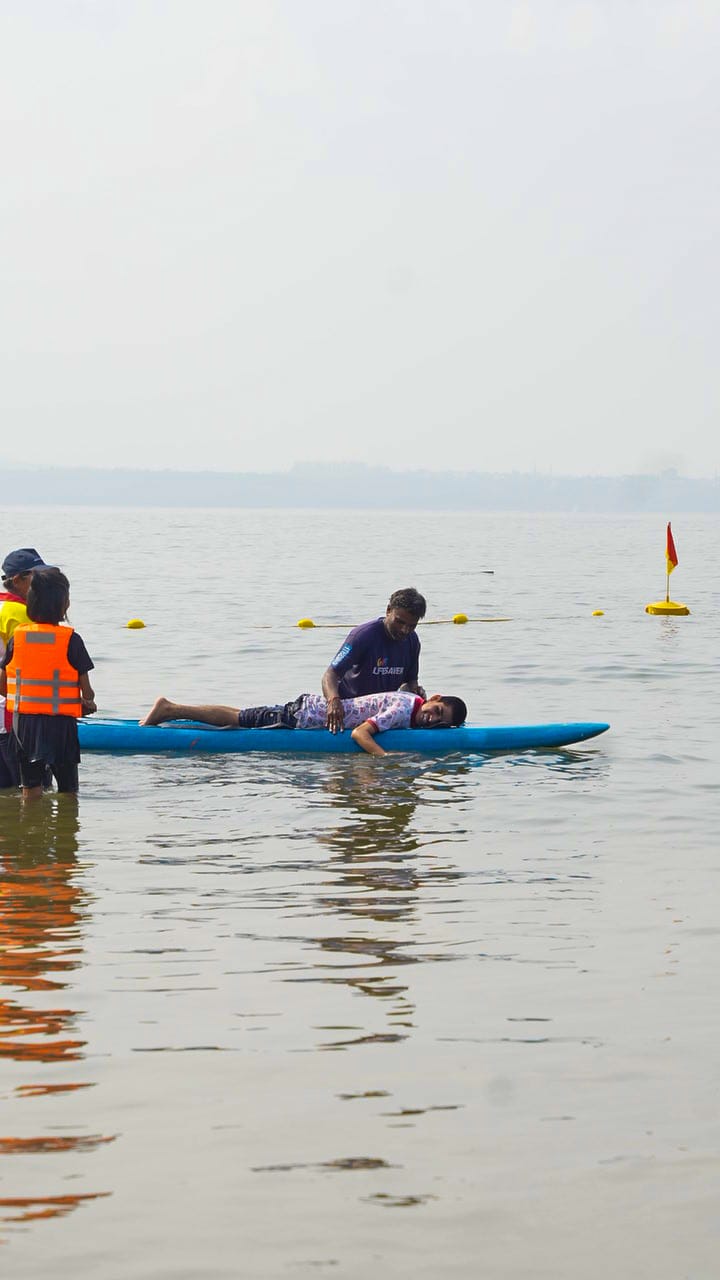
More than 800 beachgoers, including local residents and tourists, have learnt ways to stay safe in the sea through Drishti Marine’s guided sea-swimming initiative, Sagar Safar, a community-focused programme that enables people to enter the water alongside trained lifesavers while learning about ocean behaviour and safety protocols.
Since the educational initiative’s relaunch on November 17 last year, a total of 808 participants have experienced the Sagar Safar sessions across six popular beaches in Goa. The highest participation was recorded at Colva beach, where 719 people took part in the guided swim sessions. This was followed by Benaulim beach with 33 participants, Sinquerim beach with 35, Candolim beach with 11, Baga beach with eight, and Calangute beach with two participants.
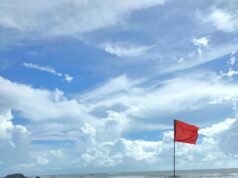
Conducted daily at 11 am and 4 pm, the hour-long Sagar Safar sessions, conducted free of cost, are designed to help participants overcome fear of the sea, understand currents, recognise flag systems and develop confidence in entering coastal waters responsibly. The programme is open to both locals and tourists and is supervised entirely by Drishti Marine’s trained teams of lifesavers.
Participants enrol directly with on-duty lifesavers at the beaches. Live announcements in multiple languages through the beach-prowling Aurus AI-bot inform beachgoers about upcoming sessions, while QR codes displayed at lifeguard towers and Drishti Marine vehicles direct visitors to additional information available online about the initiative.
“The Sagar Safar experience at Sinquerim Beach is truly beautiful and enjoyable. Through these sessions, Drishti Marine is creating memorable moments by offering a unique swimming experience right at the beach. It is a programme that everyone should experience at least once,” said Prashant Thakare, a visiting tourist, who participated in a Sagar Safar session.
Originally introduced in 2021 as ‘Swim With Lifesavers’, the initiative has returned in an expanded format as Sagar Safar following sustained interest and positive feedback from participants. The programme has proven especially valuable for visitors from non-coastal regions and first-time swimmers who are often unfamiliar with sea conditions.
According to Navin Awasthi, Chief Executive Officer of Drishti Marine, the participation numbers reflect a growing willingness among beachgoers to engage with the sea in a safer and more informed manner.
“When people understand currents, flag systems and the limits of safe swimming, they make better decisions in the water. The response we have seen shows that beachgoers are eager to learn and take responsibility for their own safety,” said Awasthi.
Each session includes a safety briefing, a guided swim using buoyancy aids and life jackets and a concluding interaction where lifesavers explain sea behaviour, rip currents and emergency response basics.
The initiative aligns with its broader objective of reducing drowning incidents while promoting ocean literacy among residents and visitors. The guided swims are conducted throughout the year, except during the monsoon season when swimming is prohibited due to rough sea conditions.