
College students drawn from technical educational institutions across Goa were recently familiarised with the practical applications of artificial intelligence and its growing role in shaping careers across industries by Adam Paulisick, a renowned professor at US-based Carnegie Mellon University’s School of Computer Science, at a workshop that unpacked how the technology is moving from theory to real-world impact.
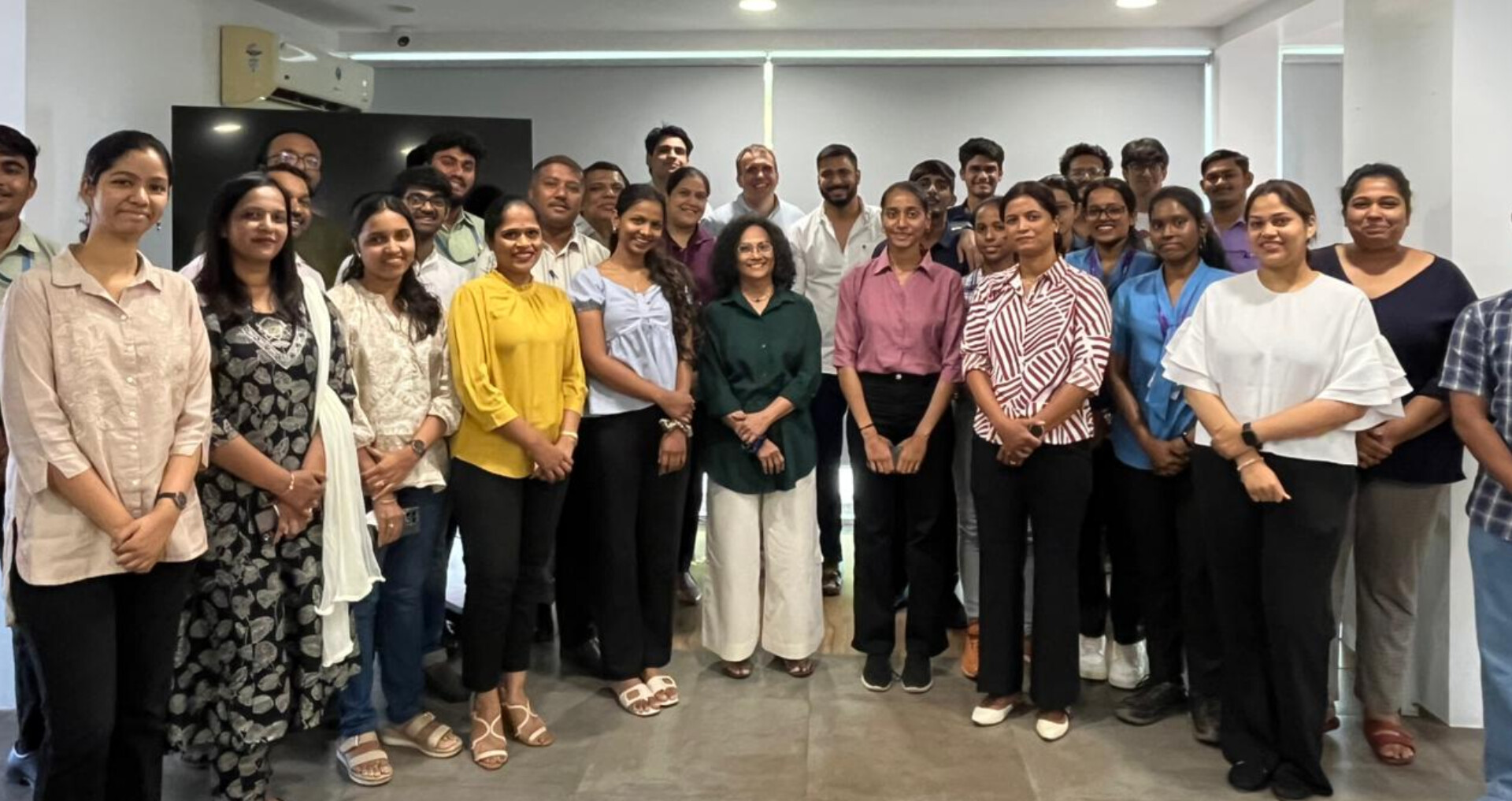
The workshop, titled ‘Growing at the Speed of Artificial Intelligence’, led by Paulisick, also at the helm of US-based AI firm SkillyAI, was hosted at the campus of digital transformation company Kilowott in Porvorim.
Students from engineering and non-engineering colleges across Goa, including Goa Engineering College and Agnel Institute of Technology and Design, Shree Rayeshwar Institute of Engineering & Information Technology, Goa College of Art, Don Bosco College of Engineering, Padre Conceicao College of Engineering, Dnyanprassarak Mandal’s College and Research Centre, Shree Damodar College of Commerce and Economics and St Xavier’s college attended the session, which focused on how AI is transforming workplaces, skill requirements and decision-making in the professional sphere.
The workshop was part of Kilowott’s ongoing efforts to bridge the gap between academic learning and real-world industry exposure in emerging technology areas that are redefining career pathways for students. It also aligns with the recently signed MoU between the Goa College of Art and St. Xavier’s College, aimed at strengthening industry–academia collaboration and supporting the growth and development of local talent.
Using business examples, Paulisick explained how AI improves efficiency and metaphorically described its processes as kitchen ingredients that must be combined effectively. “There is still a gap between the ingredients and the meal,” he said, adding that this gap is bridged by different approaches to using AI, likening them to cooking styles, ranging from augmented AI and assistive AI to AI-first systems and hybrid models that involve collaboration between humans and machines.
Speaking about India’s technology ecosystem, he highlighted how AI has the potential to accelerate learning, experimentation and innovation when used actively rather than passively. “You’ve been doing IT and technology for a very long time. But sometimes the time it takes to get to (become) a senior technologist could be 10 to 20 years; AI allows you to access the same knowledge (of a senior technologist) very quickly,” he said.
Students said the session helped demystify AI and its applications. “We hear terms like ‘data’ and ‘AI’ all the time, but this session helped us understand how they are actually used, especially in business contexts,” said Tejas, a student from Goa College of Engineering. Another student noted that the session highlighted the importance of using data responsibly.
Faculty members attending the workshop said the discussion offered clarity on choosing the right AI tools for different use cases and would help them guide students more effectively. “I use AI quite extensively in many things that I do, and this (learnings from the session) will always be an add-on, a clearer picture of what can be done,” said Basil Jose, faculty at the Agnel Institute of Technology and Design, who attended the session.