

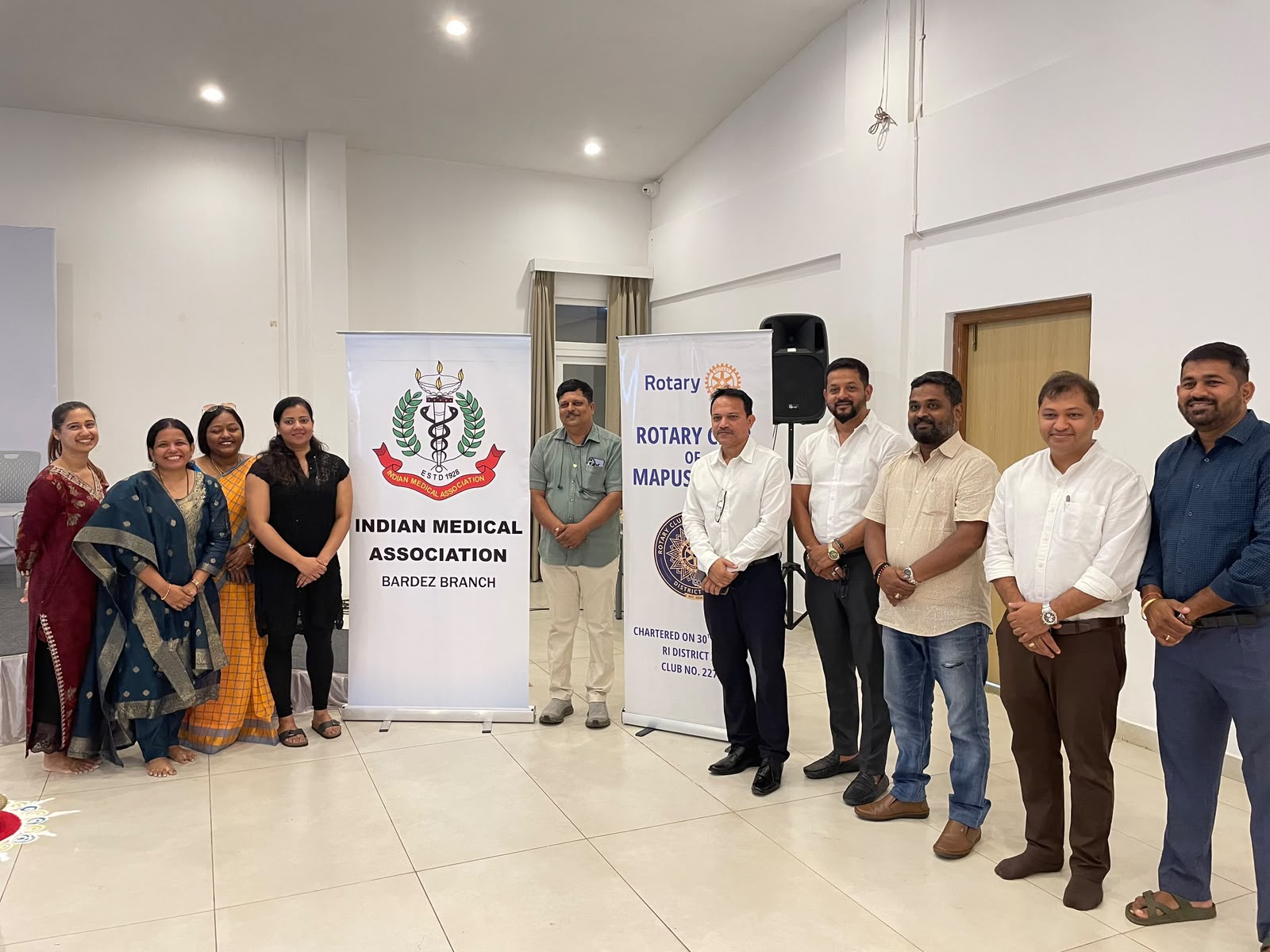
An awareness and sensitisation programme on “Understanding Neurodivergence” for Pre-Primary and Primary school teachers was successfully organised by the Indian Medical Association (IMA), Bardez, and Rotary Club of Mapusa Aura, in association with Aastha’s APAAR – Early Intervention & Child Development Centre, at Amber Hall, Aastha’s Centre of Excellence, Khorlim, Mapusa.
The programme was organised with the objective of enhancing teachers’ understanding of neurodivergent children and equipping them with knowledge and practical approaches to address their diverse learning, behavioural, communication and developmental needs in the classroom.
The programme was graced by Guruprasad Pawaskar, Commissioner for Persons with Disabilities, as the Chief Guest. Also present were Dr. Chandrashekhar Kelkar, President of Rotary Club of Mapusa Aura and Secretary of Aastha; Dr. Swapnil Arsekar, President of IMA Bardez; Rotarians among others.
The technical sessions included a talk on “Understanding Neurodivergence” by Dr. Vibha Parsekar, followed by a session on Activities of Daily Living (ADLs) and Dealing with Difficult Behaviour by Dr. Jessica Pinto. The sessions provided valuable insights into understanding the developmental needs of children and adopting appropriate strategies to support them in school environments.
A guided walk-through experience at APAAR – Early Intervention & Child Development Centre was also organised, giving teachers an opportunity to understand the various facilities, therapies and interventions offered at the centre. The visit highlighted the importance of early identification, timely intervention and collaboration between schools, parents and child development professionals.
A total of 37 teachers from various Pre-Primary and Primary schools across Bardez, Goa, participated in the programme. The interactive sessions and guided visit helped create greater awareness about neurodiversity and the importance of building inclusive, supportive and responsive classroom environments.
The programme emphasised that teachers play a crucial role in identifying developmental concerns at an early stage and ensuring that every child receives the understanding, encouragement and support needed to reach their full potential. The initiative was a meaningful step towards promoting inclusive education and building greater awareness about neurodivergence among the teaching community.