

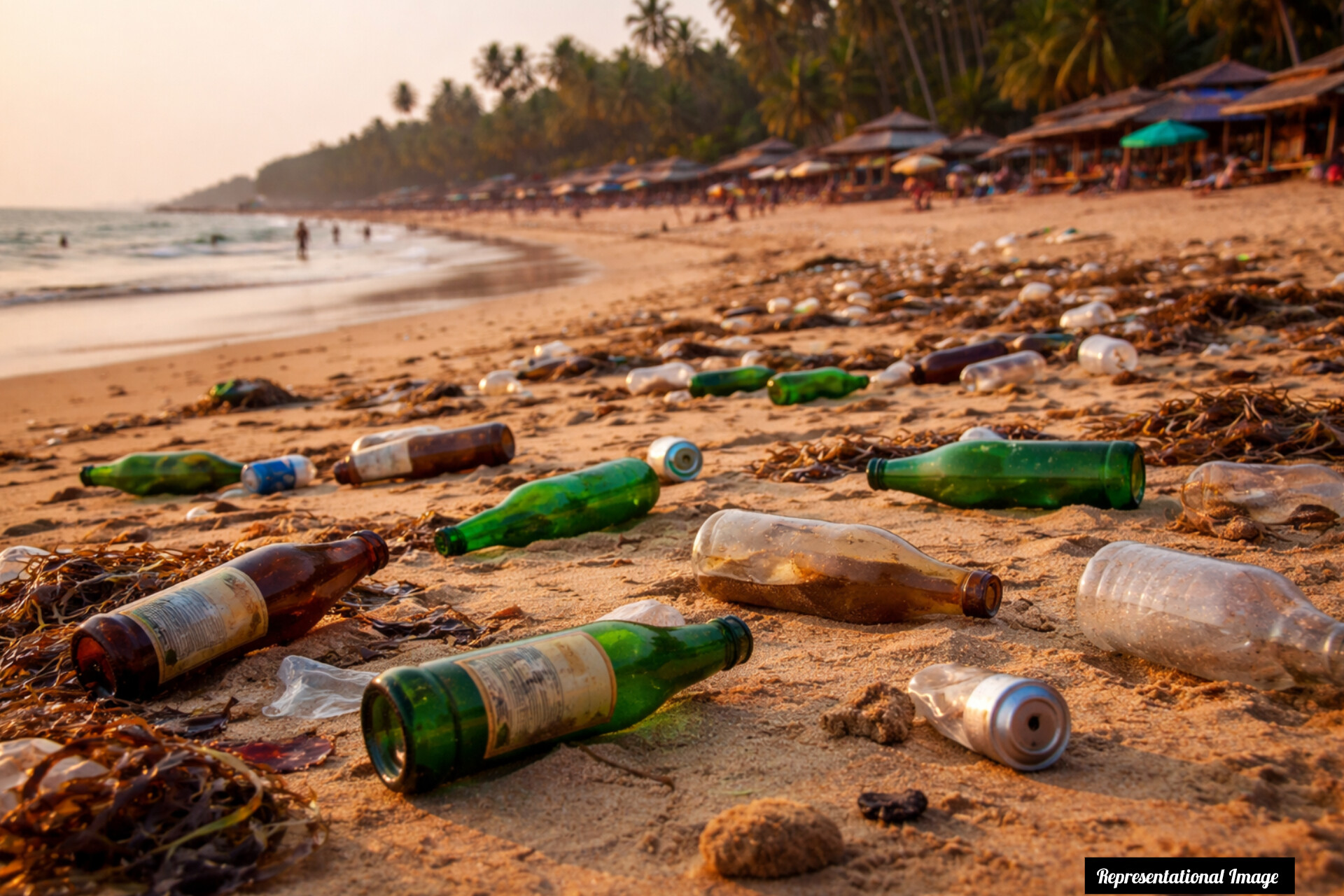
Goa’s food and beverage sector remains central to its tourism economy, but along several popular stretches, litter continues to be a recurring visual and, at times, even a safety concern for visitors. Among the more serious issues is broken glass, often from discarded liquor bottles, which poses a safety risk to both visitors and locals, unfortunately denting the perception of the tourism-oriented state.
As the state prepares to roll out its Deposit Refund Scheme (DRS) soon, stakeholders in the hospitality sector say the policy could help address this long-standing problem by introducing a value (deposit) to the packaging waste thereby influencing a change in behaviour for returning it. This will ensure that the state’s beaches and tourism-savvy areas remain clean.
“I think it is high time this issue is addressed more seriously. While different agencies are involved in garbage collection, there are still many unmonitored areas where waste is not picked up. This is particularly visible near beach entry points and around tourist areas,” says Nilesh Shah, former president of the Travel and Tourism Association of Goa (TTAG). “In my view, this has become one of the reasons for the decline in foreign tourist arrivals to Goa,” he adds.
The move towards a systematic return mechanism resonates with the state’s organised food service sector. For the food businesses that generate the most packaging waste, the DRS, which places a small, refundable deposit on packaged goods, is being welcomed as a practical solution. Eligio Fernandes, owner of the popular Arpora watering hole Cajy Bar, sees the scheme as a means to institutionalise better waste management.
“I think the DRS, the Deposit Refund Scheme, is a great initiative, to be honest. If a scheme like this comes in, where instead of just throwing these bottles into the recycling bin, I can return them to an outlet that refunds me the amount and ensures the bottles are actually recycled or used again, then I think this is one of the best initiatives coming forward for any business that uses packaged materials,” he says.
The success of the upcoming DRS mechanism lies in its preventive design and approach. The scheme focuses on ensuring discarded packaging is returned before it becomes litter rather than dealing with it after it reaches drains, beaches or public spaces. While materials with clear resale value, such as PET bottles and beer bottles, are collected to some extent, the consumer is not invested in returning it. DRS changes this outlook and encourages consumers to return glass and plastic packaging.”
The scale of the problem, especially the menace of glass litter, is evident to those on the coastline.
Anthony Fernandes, who runs the Roma Cafe beach shack along the bustling Candolim stretch, details a frequent hazard. “Even in the water there are glass bottles and people get cuts,” Fernandes says. He notes that glass litter finds its way into the sand, especially at night, when groups of domestic tourists drink on the beach and leave hazardous garbage behind.
Beach shack operators have already aligned with the DRS’s mission of encouraging proper disposal of glass bottles. “Tourists take bottles on the beach, they drink, they bury them, sometimes they litter, sometimes they break them. Later, people step on it. A lot of people cut their feet,” says Cruz Cardoz, president of the Shack Owners Association. “If you sell a bottle and tell the person to keep a deposit and take it back once the bottle is returned, people will bring it back,” he adds.

