
The CSIR–National Institute of Oceanography (CSIR–NIO), Goa, organised a Marine Venom Awareness & Outreach Program on March 27, 2026, under a CSIR-funded niche-creating project focussed on exploring the biodiversity and chemodiversity of venomous marine invertebrates along the Goa coast.
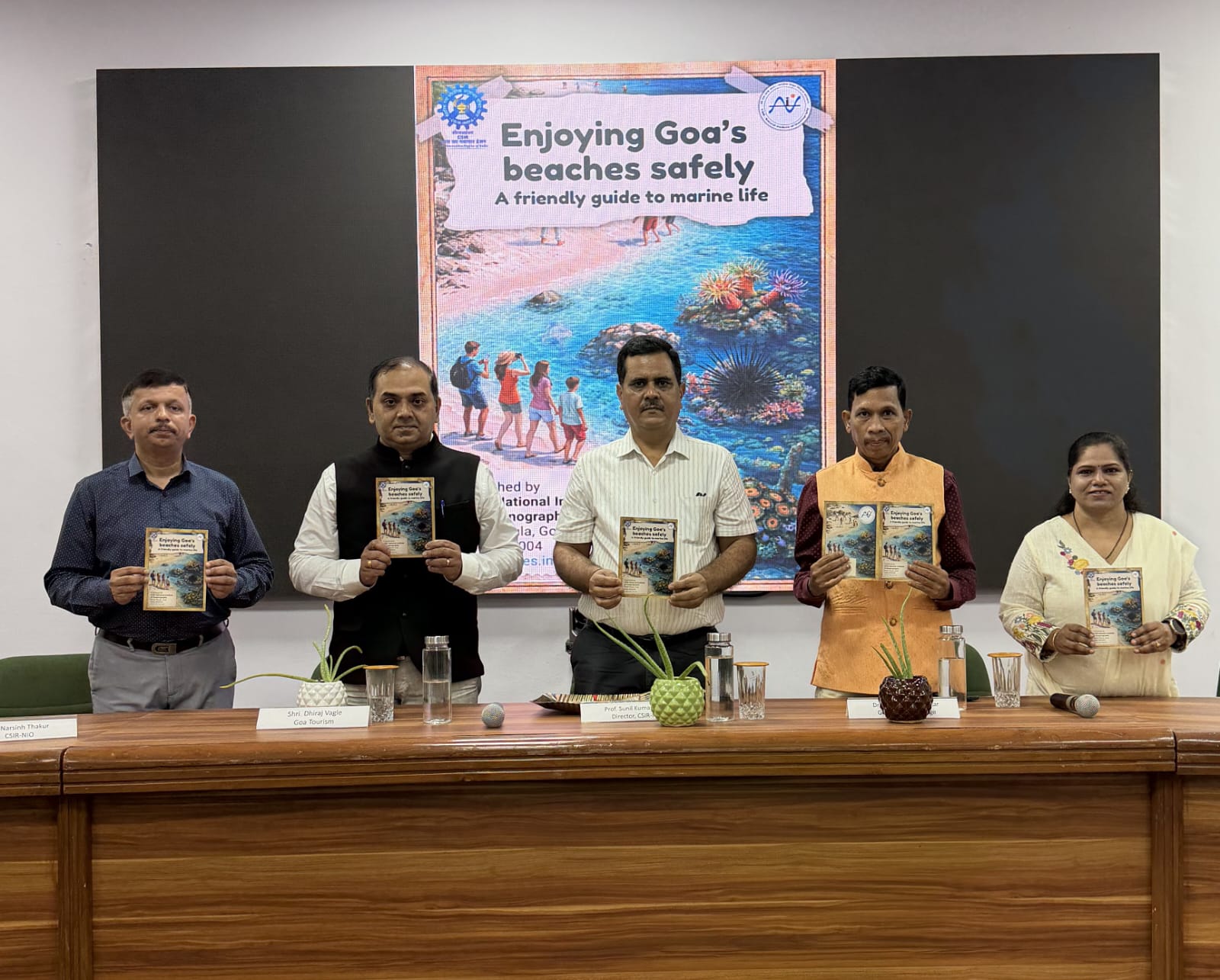
The programme, themed “Venomous Marine Life of Goa: Biodiversity, Safety and Scientific Opportunities,” was inaugurated by Prof. Sunil Kumar Singh, Director, CSIR–NIO. A special address was delivered by Dhiraj Wagle, Deputy Director of the Goa Tourism department. Remarks were also presented by Dr. Madhu Ghodkirekar, Professor, Department of Forensic Medicine & Toxicology at Goa Medical College.
A key highlight of the event was the release of a public awareness booklet titled “Enjoying Goa’s Beaches Safely: A Friendly Guide to Marine Life,” aimed at educating tourists, lifeguards, and the general public about common venomous marine organisms and safe practices along Goa’s beaches.
The programme featured expert talks by Dr. Kalyan De, Scientist, CSIR–NIO, on venomous marine organisms along the Goa coast; Dr. Narsinh Thakur, Chief Scientist, CSIR–NIO, on the therapeutic potential of marine venoms; and Dr. Madhu Ghodkirekar on emergency care for marine envenomation.
A panel discussion on “Marine Venom: Safety, Tourism Awareness & Research” brought together experts from science, medicine, and coastal management. The panellists included Dr. Madhu Ghodkirekar, Dr. Chandrakant Porob, Mr. Akash Fulkar of Drishti Marine, Dr. Mandar Nanajkar, Dr. Kalyan De, and Dr. Narsinh Thakur.
An exhibition showcasing posters and displays of venomous marine organisms, along with public awareness materials, was also organised as part of the programme.
The outreach initiative underscored the importance of raising awareness about venomous marine life along Goa’s coastline, enhancing response mechanisms to marine envenomation incidents, and promoting marine biodiversity conservation. It also highlighted the immense scientific potential of marine venoms as sources of bioactive compounds for applications in medicine and biotechnology.
The scientists, medical professionals, lifeguards, tourism officials, students, and coastal stakeholders were present.