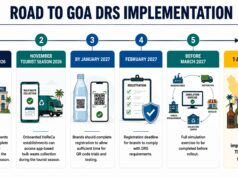

As Goa prepares to roll out its Deposit Refund Scheme (DRS) on 1 September, the initiative is expected to strengthen recycling, make it simpler and more rewarding by assigning a refundable value to used beverage containers, which often end up as litter. By encouraging people to return empty bottles and cans instead of discarding them, the scheme aims to improve recycling rates, reduce litter and strengthen the state’s circular economy.
Unlike conventional waste collection systems, the Goa DRS assigns a refundable value to eligible beverage containers, rewarding consumers for returning them while creating cleaner recyclable material streams that benefit waste collectors, collection agents and Material Recovery Facilities (MRFs). According to Goa’s Plastic Waste Management Annual Report 2022–23, the state recycled nearly 7,500 tonnes of plastic waste and diverted over 10,800 tonnes through RDF (Refuse-Derived Fuel) and cement co-processing, with the DRS expected to further strengthen recycling efforts.
Chairman of the Goa DRS Authority,. Dr Anthony de Sa, said, “The DRS converts waste into a redeemable asset. Once people recognise that every eligible bottle or can has value, they are far more likely to return it instead of discarding it. That collective intent to recycle is what will ultimately help Goa recover cleaner materials, improve recycling outcomes and build a stronger circular economy.”
International evidence shows that a well-designed Deposit Return System can raise beverage container recycling from about one-third or one-half to around 80–90%. India’s beverage carton recycling rate is about 48%. DRS typically raises return rates by giving consumers a deposit-linked incentive to bring packaging back, increase collection and reduce disposal.
The initiative has also received support from environmental groups and community leaders who have long advocated better waste segregation and recycling practices.
Joan Fernandes, founder of the Goa-based Seastheday2026, said, “Recycling begins with proper waste segregation at the source. By taking just a few minutes to sort the waste they generate, individuals not only support recycling but also make the job safer and easier for waste collectors so that the recyclable waste can make its way to the recycler in the fastest way possible”.
“We live in a beautiful state like Goa which is small and its absolutely possible to adopt a completely sustainable approach. We are bang in the center of the western ghats, a biodiversity hotspot and there’s complete disregard to the destruction to the environment and the generation of garbage and litter. Effective recycling can ensure that plastic and glass waste can be recycled rather than find its way into our forests, rivers and villages of Goa”, said Aron Fernandes-Founder, Kachra Kartel.
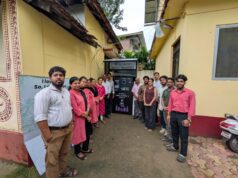
Vilas Morje, sarpanch of Morjim Village Panchayat, said, “The installation of the DRS machine is an important step towards addressing the waste management challenges faced by our village. By encouraging the return of used beverage containers, we can reduce litter, support cleanliness efforts, and contribute to the vision of a cleaner and more sustainable Goa.”
Goa DRS has been conducting demonstrations and public awareness activities across the state ahead of the scheme’s formal rollout. The initiative has already secured widespread support from local bodies, with over 150 village panchayats and nine urban local bodies issuing No Objection Certificates (NOCs) for RVM installations. The first Reverse Vending Machine under the scheme was inaugurated at INS Mandovi recently, marking another milestone as Goa prepares to implement one of India’s most comprehensive Deposit Refund Schemes.