
Goa Football Association on Wednesday, issued the following statement to dispel speculation concerning the recent on-field tragedy during a inter-village match.
“Goa Football Association (GFA) expresses its profound grief and heartfelt condolences on the tragic passing of Dailon Carvalho, who collapsed during the 47th Cana-Benaulim Soccer Inter Village Tournament 2026 match between Guardian Angel Sports Club and United Boys of Ambaulim. Our thoughts and prayers are with his family, teammates, friends and the entire football fraternity during this extremely difficult time.
While the Association fully understands the emotions surrounding this unfortunate incident, it is deeply concerned by attempts to attribute responsibility to the Goa Football Association without a proper understanding of how grassroots football is organised in Goa.
The GFA believes that facts must prevail over emotion.
The Inter Village Football Tournament is a community-based competition that has been the lifeblood of Goan football for decades. These tournaments are organised by independent village clubs and organising committees, with the Goa Football Association providing regulatory oversight, fixtures, referees and disciplinary governance in accordance with its statutes. The GFA does not organise, manage or control the day-to-day operational arrangements of every Inter Village Tournament conducted across the State.
Every football season, more than 60 Inter Village Tournaments are conducted throughout Goa. During the previous season alone, 64 tournaments comprising 981 matches were successfully organised.
Simultaneously, the Goa Football Association itself organised 1,354 official matches across 15 different competitions during the same season. On many days, as many as 15 to 16 matches are played simultaneously at venues spread across the State.
Suggestions that the GFA should provide a dedicated ambulance with advanced life support at every football match ignore the practical realities of organising football on such a scale.
A private ambulance equipped with an Automated External Defibrillator (AED) and a trained paramedic typically costs between ₹6,000 and ₹8,000 per match. Applying this requirement uniformly across nearly 2,300 matches conducted annually would involve expenditure running into several crores of rupees every season an amount that is far beyond the financial capacity of community-based village clubs and tournament organisers.
Equally, Government emergency ambulances are intended to serve the public during medical emergencies and cannot realistically be deployed exclusively for football matches across the State.
These are not excuses; they are operational realities faced not only in Goa but across grassroots football in India.
The unfortunate truth is that even the immediate presence of an ambulance does not, by itself, guarantee a favourable outcome in every medical emergency. In cases of sudden cardiac arrest or collapse, the most critical factor is the quality and speed of the first few minutes of response. Immediate CPR, prompt use of an AED where indicated, and trained first responders often determine the chances of survival before advanced medical care arrives.
For this reason, the Goa Football Association believes that the conversation must move beyond assigning blame and instead focus on creating sustainable solutions that genuinely improve player safety.
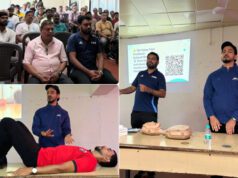
The Association has already initiated work on developing a comprehensive emergency response framework for grassroots football in Goa. This framework will focus on training club officials, tournament organisers, volunteers and match personnel in emergency medical response, CPR and AED usage, while progressively strengthening medical preparedness at football venues in collaboration with Government agencies, medical professionals and other stakeholders.
The GFA remains committed to reviewing existing regulations, learning from this tragedy and implementing practical measures that can be effectively adopted across all levels of football in Goa. The Association will soon, in August, through the GFA Medical Committee, conduct First Aid and CPR courses for club officials and organisers. The Association has already implemented pre competition medical tests for all players since the last two years.
However, the Association cannot accept attempts to unfairly portray the GFA as indifferent to player welfare or solely responsible for circumstances arising from a challenge that affects grassroots football across the country. Such narratives neither honour Dailon’s memory nor contribute to meaningful reform.
This is a time for unity, compassion and constructive action not speculation or misplaced accusations.
The Goa Football Association once again conveys its deepest condolences to Dailon Carvalho’s family and assures the football community that player safety will continue to remain one of its highest priorities. We invite all stakeholders including clubs, tournament organisers, Government authorities, medical professionals and the football fraternity—to work together in developing realistic, sustainable and effective safety protocols that protect every footballer who steps onto the field.”